
Week Without Driving Recap
Week Without Driving is a voluntary challenge where participants commit to trying to get around without driving alone for one week. The goal is simple: experience what it’s like to rely on walking, biking, transit, carpooling, or other alternatives, and see where our system supports people well and where it needs work. This year’s campaign encouraged employees to try new modes, share what surprised them, and reflect on the small wins and challenges they experienced along the way.
How it felt to ditch the car for a week:
During the Week Without Driving in October, over 243 City employees swapped solo driving trips for alternatives like buses, trains, carpools, bikes, telecommuting, and walking. The initiative aimed at exploring the benefits and challenges of moving around the city without a personal vehicle, providing participants with a fresh perspective on the city’s vast multi-modal transportation system and streetscapes. Many discovered new community connections and a reduced level of daily stress, while others valued the extra time for reading, listening to podcasts, or catching up on some sleep.
What people tried:
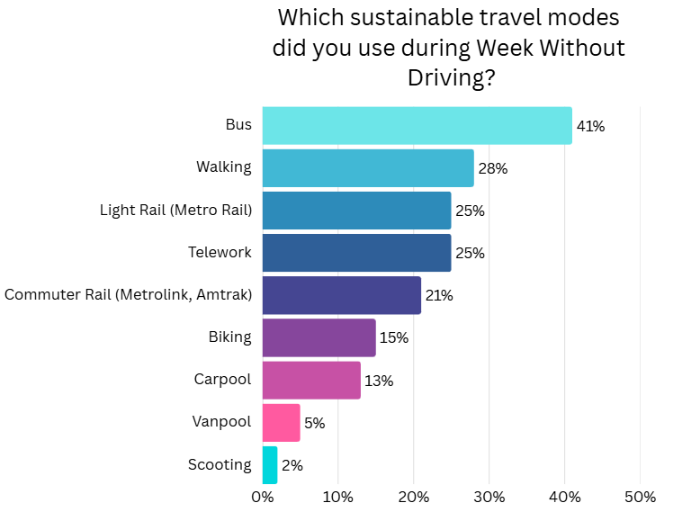
Bus was the most popular mode used during the challenge, with walking, Metro Rail, telework, and Commuter Rail right behind it. Additionally, 30% of respondents tried new modes that they don’t normally use – showing the power of a challenge like this to encourage the formation of new, healthier, and more cost-effective commuting habits.
What challenges did people face:
Many participants had smooth sailing during Week Without Driving, with 23% saying they didn’t face any challenges at all. Among those who did, the most common hurdles were safety concerns (20%), time management or scheduling conflicts (14%), and reliability issues (10%) like bus delays or timing gaps between trains. A few noted the weather, carrying groceries, or limited bike lanes or walking paths as obstacles as well.
What surprised people most:
Many employees kept coming back to one core takeaway: they felt noticeably less stressed when they weren’t behind the wheel. Without traffic, parking stress, or the constant pressure to beat the clock, the commute felt easier to manage. Many were pleasantly surprised by how smooth and reliable their bus or train ride was (“on time more than expected” was a common refrain), and how those few extra minutes walking to a stop became moments of calm. Others rediscovered small joys like people-watching, catching up on reading, or even sneaking in a nap on the ride home.
Some participants encountered challenges: crowded buses, tricky sidewalks, or gaps in bike infrastructure that reminded them how much better LA has become for non-drivers.
But overall, the mood was positive as most found that skipping the car didn’t just change their commute; it changed their mindset. Slowing down revealed a more connected, more human way to move through the city.
“What surprised me the most was how energized and active I began to feel—especially during my walks. Without relying on a car, I naturally incorporated more movement into my day. Walking became not just a mode of transportation, but a form of exercise and a mental reset. I noticed a boost in my energy levels and a greater sense of presence in my surroundings. It reminded me how small changes in routine can lead to meaningful improvements in both physical health and overall well-being.”
– Merlo Manaois
Stories people shared:
Less driving did not just change routes. It changed routines, made room for books and podcasts, sparked small friendships, and reminded people that moving through the city can feel human, healthy, and sometimes even joyful.
The reflections read like a love letter to slower, saner trips. The community aspect kept popping up. Respondents noted, “Taking the bus gave me opportunities to meet people and I actually was able to make a lot of friends,” and “You meet the same people at the same time and the passengers care about each other.”
Quiet time mattered too. “Riding the train home gives me time to decompress,” and “Taking the commuter express bus isn’t just transportation; it’s a little act of reclaiming my morning.”
Active trips offered wellness benefits: “Riding a bike to work has been the most meditative activity I have done in my life,” “I got a lot of steps in,” and “Walking to work really helps me put in a little exercise.” People were better at utilizing their time: “Taking metro gives me the opportunity to cut into my to be read list,” “I like to arrive at the office calm and refreshed,” and, yes, “I even got a little nap during my ride home.”
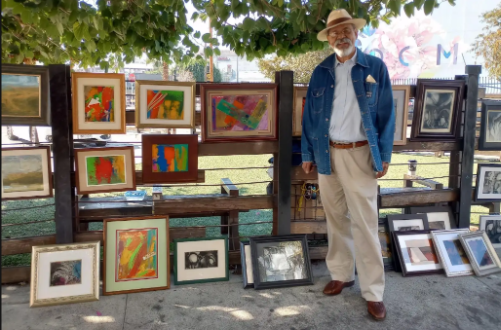
I met and talked to several interesting people. – Mark Ivey
We also heard some fantastic stories, including a 25-mile buddy ride that turned a friend into a confident cyclist, a juror who beat the car crowd by hopping light rail, and a sunrise bike commute on the LA River with ducks and hawks for company.
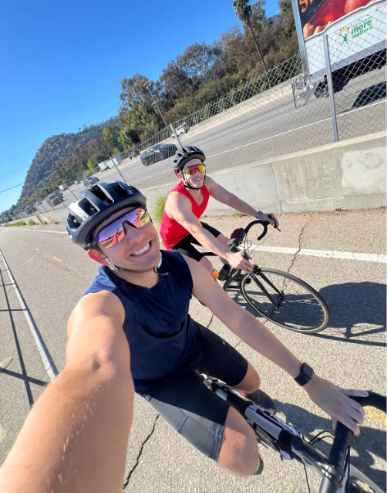
“I have a friend who wanted to get more into biking and since I have two bikes, I told him to show up with a helmet and a good attitude. I took him on a 25-mile bike ride along Downtown, the LA River Path, and parts of Griffith. He had a great time and is likely to bike more himself now that he feels a lot more comfortable. I think that that showing people that they CAN indeed still get around on bike and experience the city on a more human scale is important to promoting not only good environmental practices but social practices in the larger scale of living in a city.”
– Richard Windisch
Save money and reclaim your commute with COMMUTEwell:
If you’re thinking about trying a different mode or would like help figuring out which City benefits apply to your commute, you can sign up for Personalized Commute Assistance and get practical, one-on-one guidance. COMMUTEwell also offers programs that make non-driving options more affordable, including transit, biking, and vanpooling subsidies, plus discounted and priority carpool parking passes. Visit https://lacommutewell.com/ to learn more and see what fits your routine.
“With the city's Transit Subsidy Reimbursement, public transit saves money and the stress of driving in traffic.”
– Marijo Lopez